

Overview
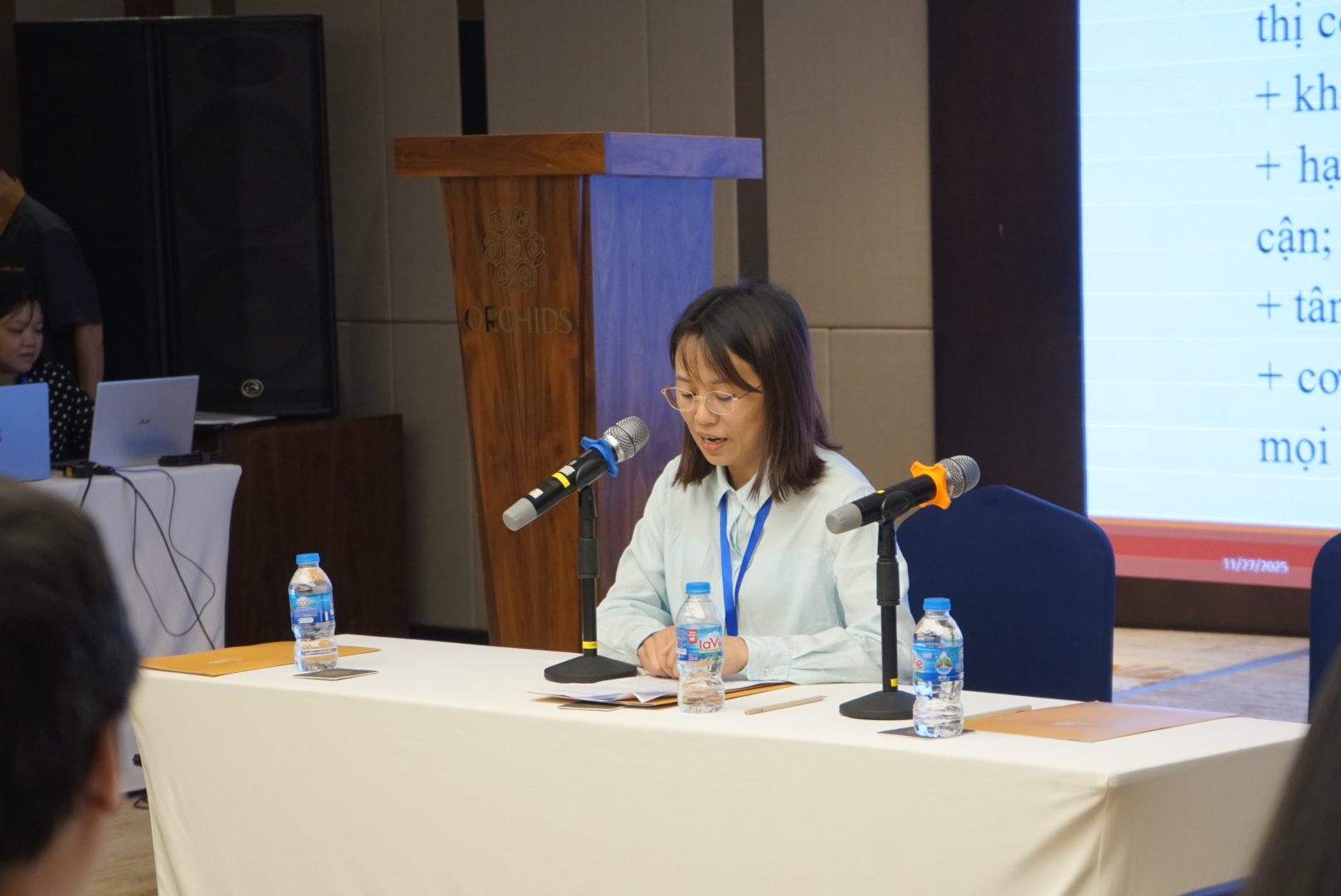
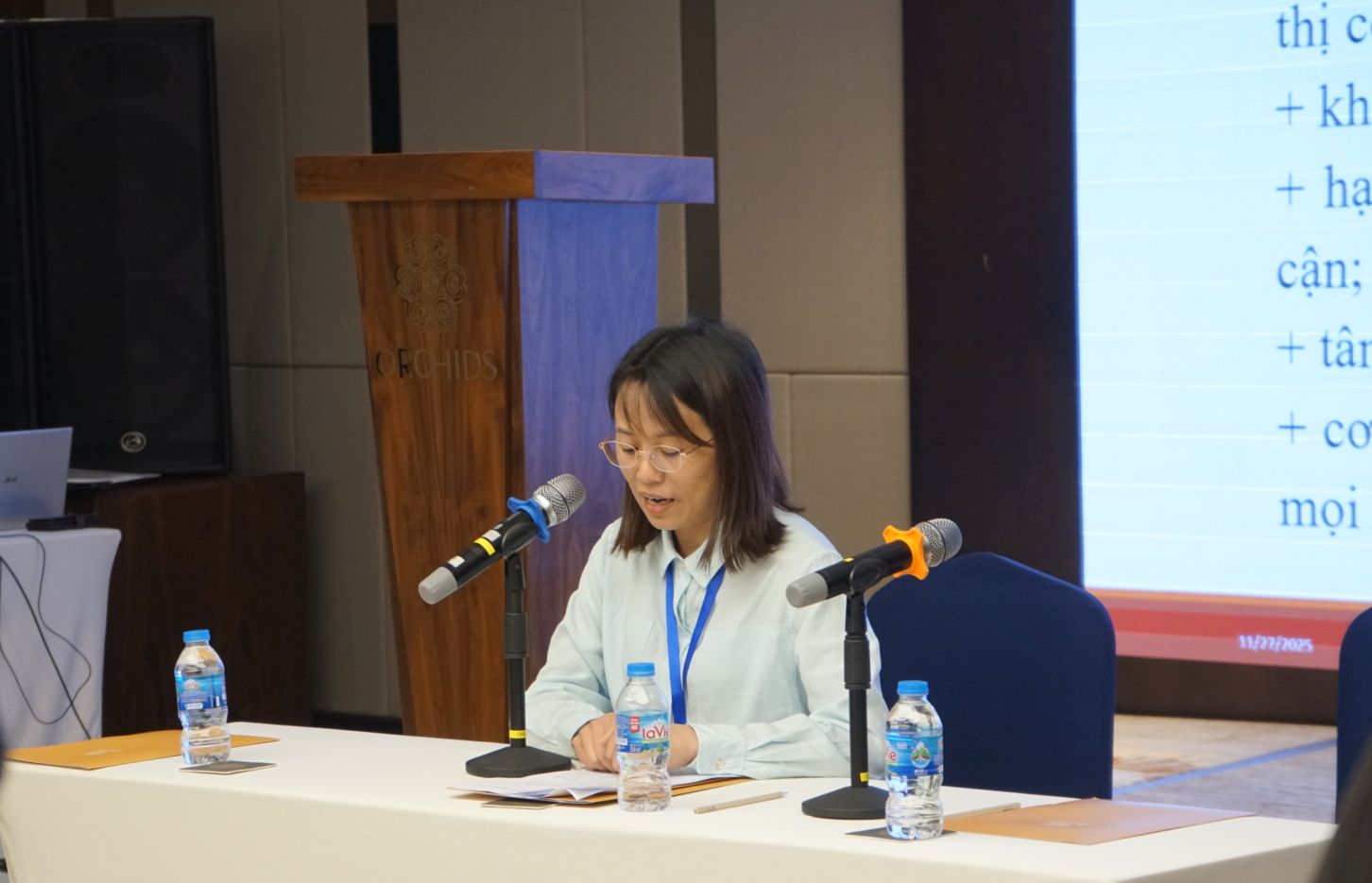
At the “Employment Bridge – Accompanying Employers and People with Visual Impairments” conference organised by Sao Mai Center for the Blind with support from The Nippon Foundation on 27 November 2025 in Ho Chi Minh City, the presentation by Ms. Nguyen Thi Huyen Trang, Deputy Director of the Training Centre for Rehabilitation Staff for the Blind (under the Vietnam Blind Association), offered a systematic overview of employment support and job placement models for people with visual impairments across the country. Drawing on data, real stories and practical experience, she highlighted the central role these models play in helping people with visual impairments gain jobs, stable income and equal status in society.
Employment – a “Inclusion measure” for people with visual impairments
At the beginning of her talk, Ms. Nguyen Thi Huyen Trang emphasised that employment for people with visual impairments is not only a source of income. It is also about personal value, independence and dignity, and it is a “gateway” to social inclusion. When they have suitable jobs, people with visual impairments have more opportunities to show their abilities, contribute confidently and change how the community sees them.
However, the path to employment still has many barriers. There is a gap between existing skills and the real needs of the labour market. Many people lack assistive devices, accessible technology and materials. Some employers still feel hesitant about hiring staff with disabilities. There are also disparities between urban and rural areas, and between different age groups and circumstances. All of this makes it difficult for many people with visual impairments to find jobs that fit them, even though they have strong will and effort. In this context, employment support and job placement models play the role of an important “stepping stone” that brings jobseekers with visual impairments closer to the labour market.
Key employment support and job placement models
From the practical work of the Vietnam Blind Association system and the Training Centre for Rehabilitation Staff for the Blind, Ms. Nguyen Thi Huyen Trang presented several models that are directly contributing to sustainable livelihoods for people with visual impairments.
Traditional Models
One important group of models focuses on local training, production and services. Across the country, there are now hundreds of massage clinics and small production groups making items such as toothpicks, brooms, incense, woven products and honey, managed by provincial Blind Associations. These models are relatively easy to set up, suitable for many age groups, and bring an average income of around VND 2.5–3.5 million per month. They are helping more than 3,700 people with visual impairments earn a stable livelihood in their own communities. Among them, traditional massage remains a key occupation, with many practitioners earning between VND 7–10 million per month.
Alongside this are specialised vocational training programmes that standardise massage skills based on Japanese, Korean and Swedish techniques, as well as training courses for traditional medicine physician assistants. By gaining deeper medical knowledge and professional procedures, trainees not only improve their skills but also expand their client base and build greater trust with treatment facilities and businesses. This model is helping to take massage for people with visual impairments to a new level of professionalism and sustainability.
Modern Models
A particularly innovative highlight is the Cafe More model – a programme that trains barista skills and café operations for trainees with visual impairments, implemented with the support of KOICA – Siloam. Beyond vocational training, this model connects the full chain from training and practice to job creation and social business development. Currently, two Cafe More shops are operating in Hanoi, creating jobs for 12 staff with visual impairments. The cafés also help staff build a professional work attitude, communication skills, customer service skills and the ability to handle real-life situations in a modern service environment. By 2026, the system is expected to expand to three outlets and train about 36 trainees, becoming a good example of independent, inclusive work for people with visual impairments in the café service sector.
The presentation also underlined a new direction: digital skills training aimed at the online labour market in the context of digital transformation. Many people with visual impairments are now working in jobs such as online sales, remote customer service, technical support, communications and content creation, data labelling, content checking and web accessibility testing. These roles do not depend on physical mobility and are made possible by screen reader technologies such as JAWS, NVDA and VoiceOver. This opens up a wider and more flexible job market for the visually impaired community.
Other Models
Another important model is the preferential loan programme, with a total fund of about VND 52 billion from the State, which supports thousands of members to open massage clinics, run small businesses, provide online services or develop handicrafts. Through this, people with visual impairments can create their own jobs and stand on their own feet through their labour.
At different levels, the Vietnam Blind Association also runs job connection and placement activities with businesses. The Association acts as a bridge to introduce candidates for trial work, support interview skills, provide follow-up support after recruitment, and discuss accessible technology and working conditions with employers. Although the number of inclusive vacancies is still limited, this is an important channel to expand formal employment opportunities in the business sector. At the same time, networks of students with visual impairments and youth clubs are becoming a support base for the new generation of workers. They offer career guidance, help build soft skills and connect internship and employment opportunities after graduation, thereby contributing to the development of a future digital workforce made up of people with visual impairments.
Conclusion and Key Messages
In closing, Ms. Nguyen Thi Huyen Trang stressed that employment support and job placement models do not only help people with visual impairments “have a job and an income”, but more importantly, help them “have a future, a status and the right to choose their own path”. The Training Centre for Rehabilitation Staff for the Blind is committed to continuing to expand effective models, standardise training programmes and strengthen cooperation with businesses and organisations inside and outside Vietnam. Working together with the Vietnam Blind Association system and other organisations for people with visual impairments, the Centre seeks to create more meaningful and sustainable employment opportunities for people with visual impairments in Vietnam.
In the spirit of the “Employment Bridge – Accompanying Employers and People with Visual Impairments” conference, Ms. Nguyen Thi Huyen Trang’s presentation is a powerful reminder that every business, every organisation and every support programme, when well designed and seriously implemented, can become a crucial link in bringing people with visual impairments closer to sustainable employment and full inclusion in economic and social life.
Share via:
EmailFacebookTwitterGoogleLinkedin