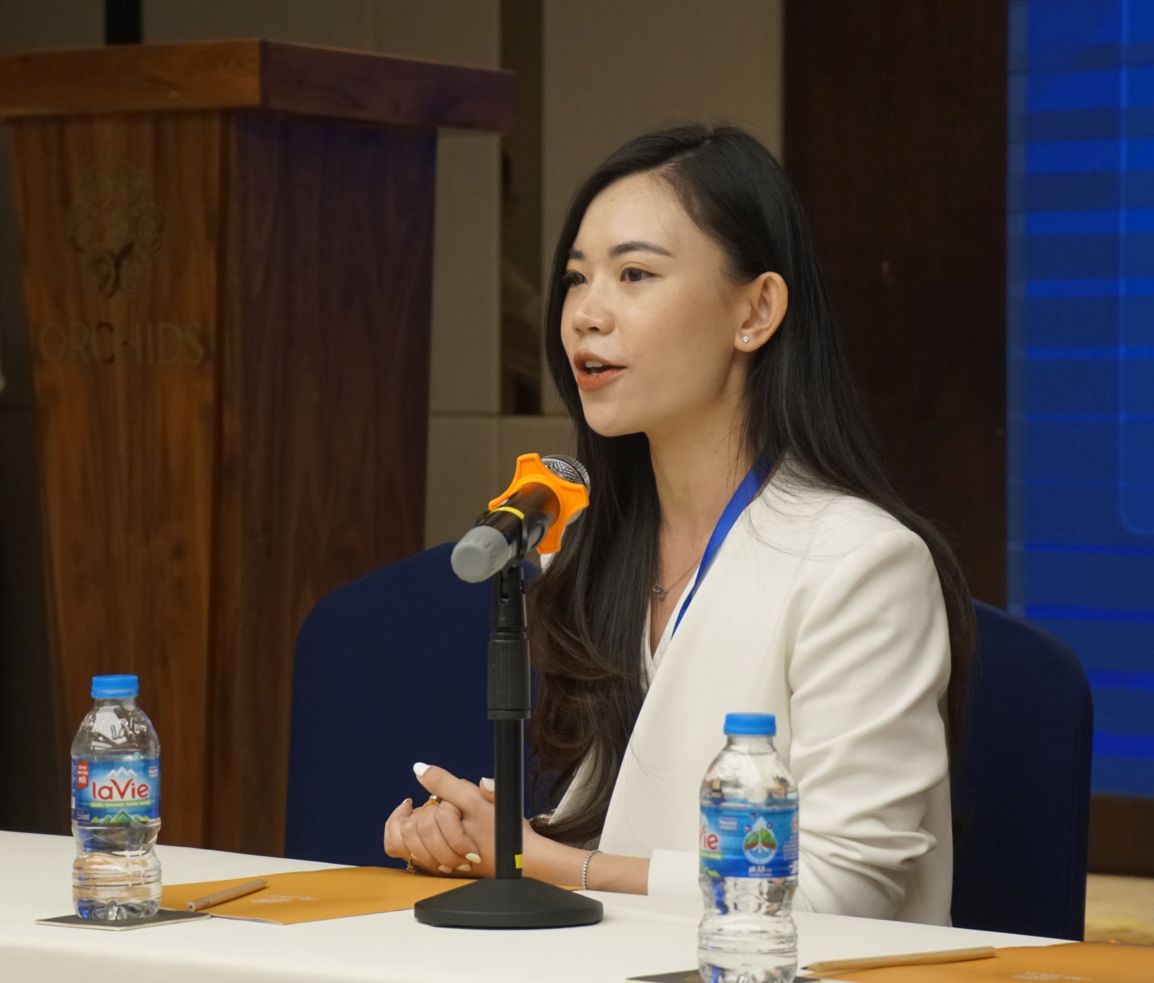


At the “Employment Bridge – Accompanying Employers and People with Visual Impairments” conference organised by Sao Mai Center for the Blind with support from The Nippon Foundation on 27 November 2025, businesses, employers, support organisations and jobseekers with visual impairments came together to discuss inclusive employment opportunities in a changing context. In the session on “Unlocking opportunities through technology”, Ms Trang Nguyen, Operations Manager of the social enterprise Enablecode, shared how technology can become a powerful lever for creating sustainable jobs for persons with disabilities in general, and people with visual impairments in particular, drawing on the real-life experience of her organisation.
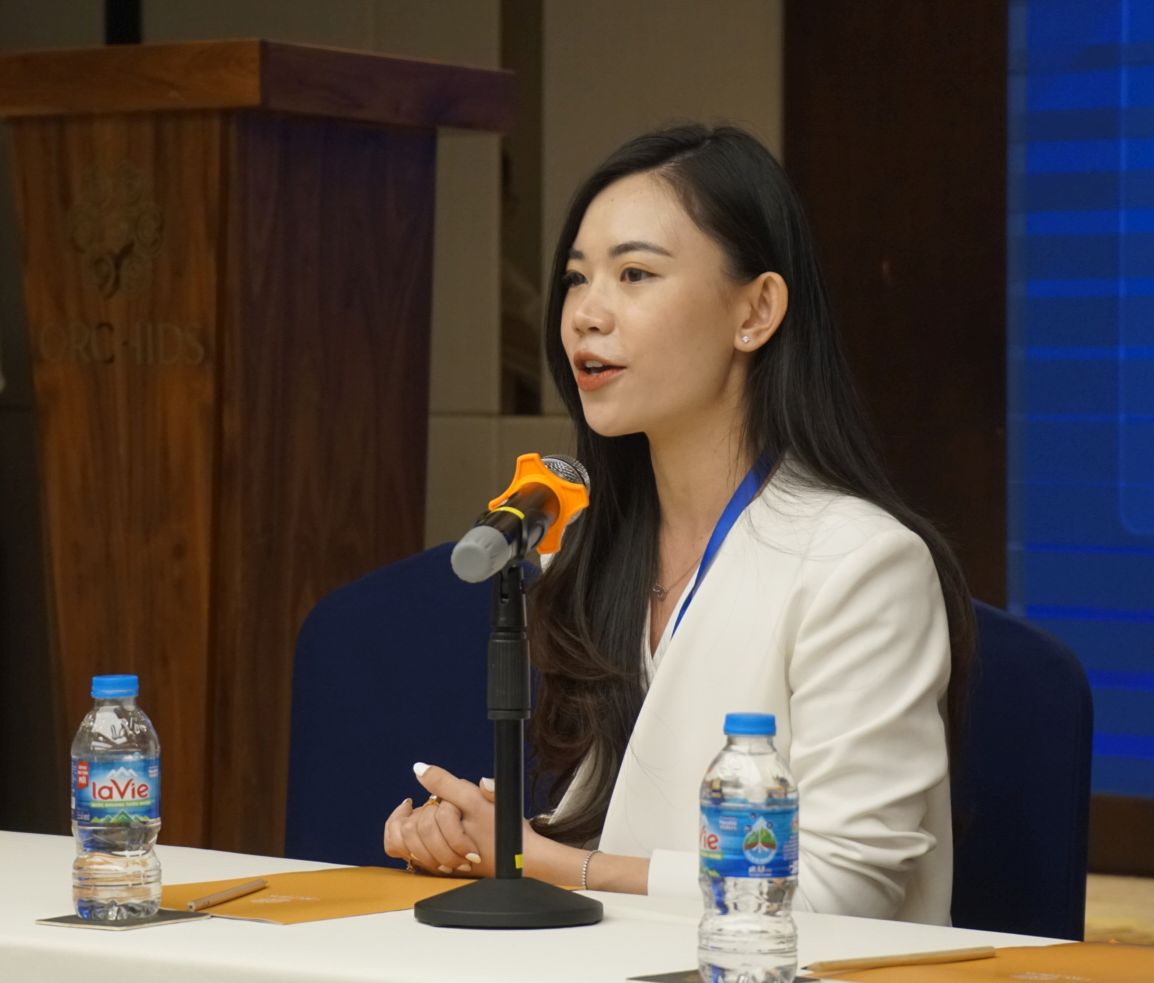
About Enablecode
With a mission to create and connect employment opportunities for persons with disabilities, Enablecode began with a model of directly recruiting persons with disabilities to work in its office. At present, the enterprise employs around 15 staff with disabilities in areas such as programming, data processing, marketing and various other digital tasks. This working environment enables staff to build experience, strengthen their technical skills and develop professional work habits. As a result, many are able to confidently move on to roles in other companies as skilled employees, rather than being seen only as “beneficiaries of support”.
Building on this foundation, Enablecode has gradually expanded its role, moving from supporting employment for a small group to partnering with digital service companies and BPO providers, and then to influencing the system more broadly. In the second phase, the enterprise has worked with BPO centres and outsourcing partners to develop workflows that can be carried out remotely, thereby connecting and supporting jobs for hundreds of persons with disabilities across the country. In the third phase, Enablecode has engaged in policy consultation, research and solution design together with government agencies, the Vietnam Business Forum (VBF) and international partners, with the aim of improving working conditions for thousands of workers with disabilities through policy changes and more inclusive recruitment practices.
Technology expanding employment opportunities for persons with disabilities
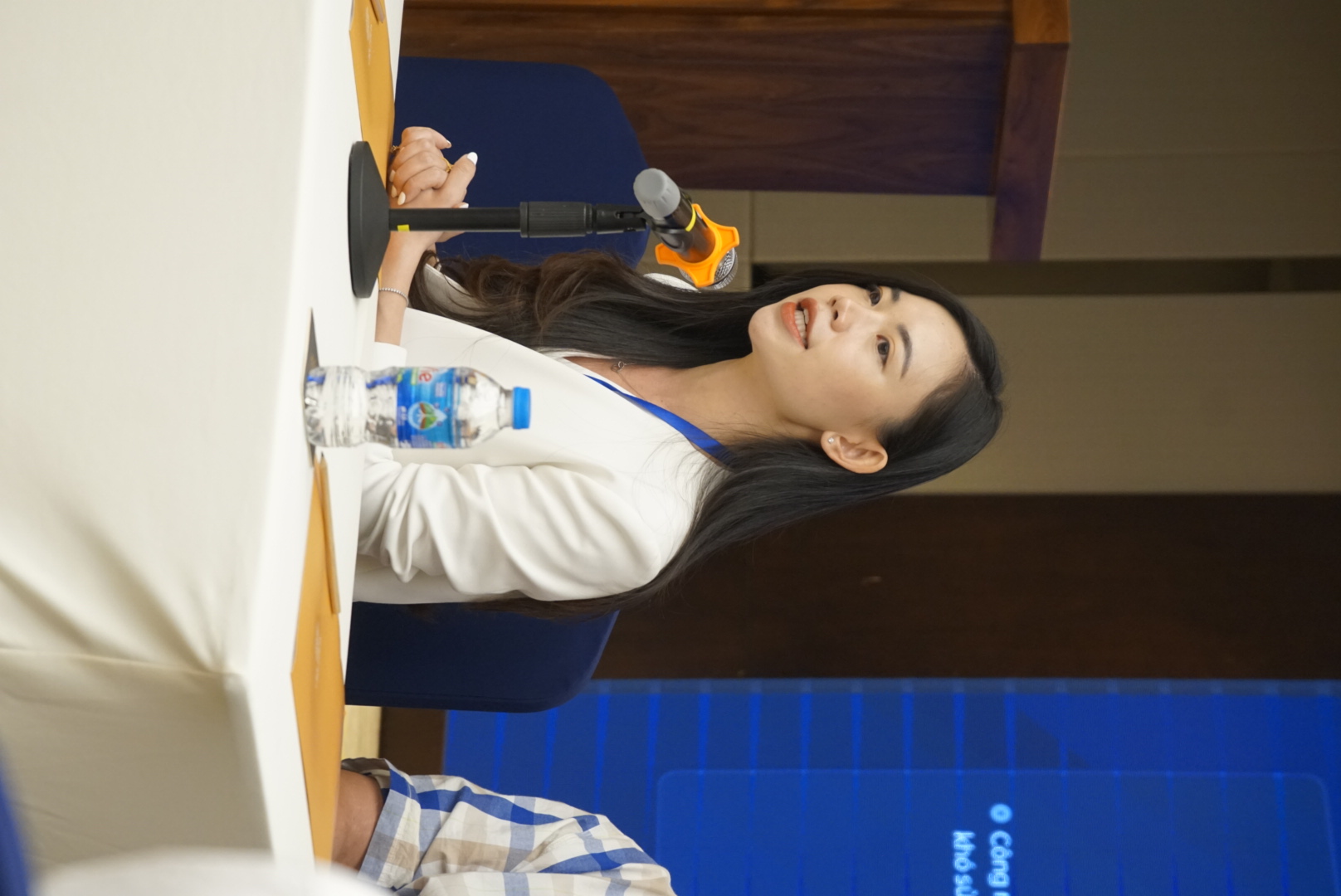
In her presentation, Ms Trang emphasised that a key driver of inclusive employment is the rapid development of assistive technology. Around ten years ago, assistive devices were still expensive, complex and difficult to use. Today, many accessibility features are already built into smartphones, from screen readers and voice guidance to object recognition. This allows people with visual impairments and many other disability groups to access information, communicate and work in digital environments more easily, using just a common device.
At the same time, the emergence of artificial intelligence solutions such as GPT Atlas enables users to give voice commands, navigate interfaces and run automated task sequences, opening up new ways of working based on audio and spoken interaction.
Another key point in the presentation was the message to employers: technology has made reasonable accommodations much easier and far less costly than before. With tools that are already available on computers and phones, companies can create more accessible workplaces for employees with visual impairments simply by adjusting settings or enabling built-in features, instead of investing in expensive specialised equipment. Employers can also apply AI in recruitment to assess candidates based on real skills rather than just the appearance of their CVs, and be ready for work models that rely on sound, voice, automated navigation and remote or hybrid arrangements. These models are particularly suitable for persons with disabilities, for whom travel barriers are still significant. As Ms Trang stressed, most of these changes do not require major financial investment; what they mainly require is a willingness to rethink mindsets and the way work is organised.
Conclusion and key messages
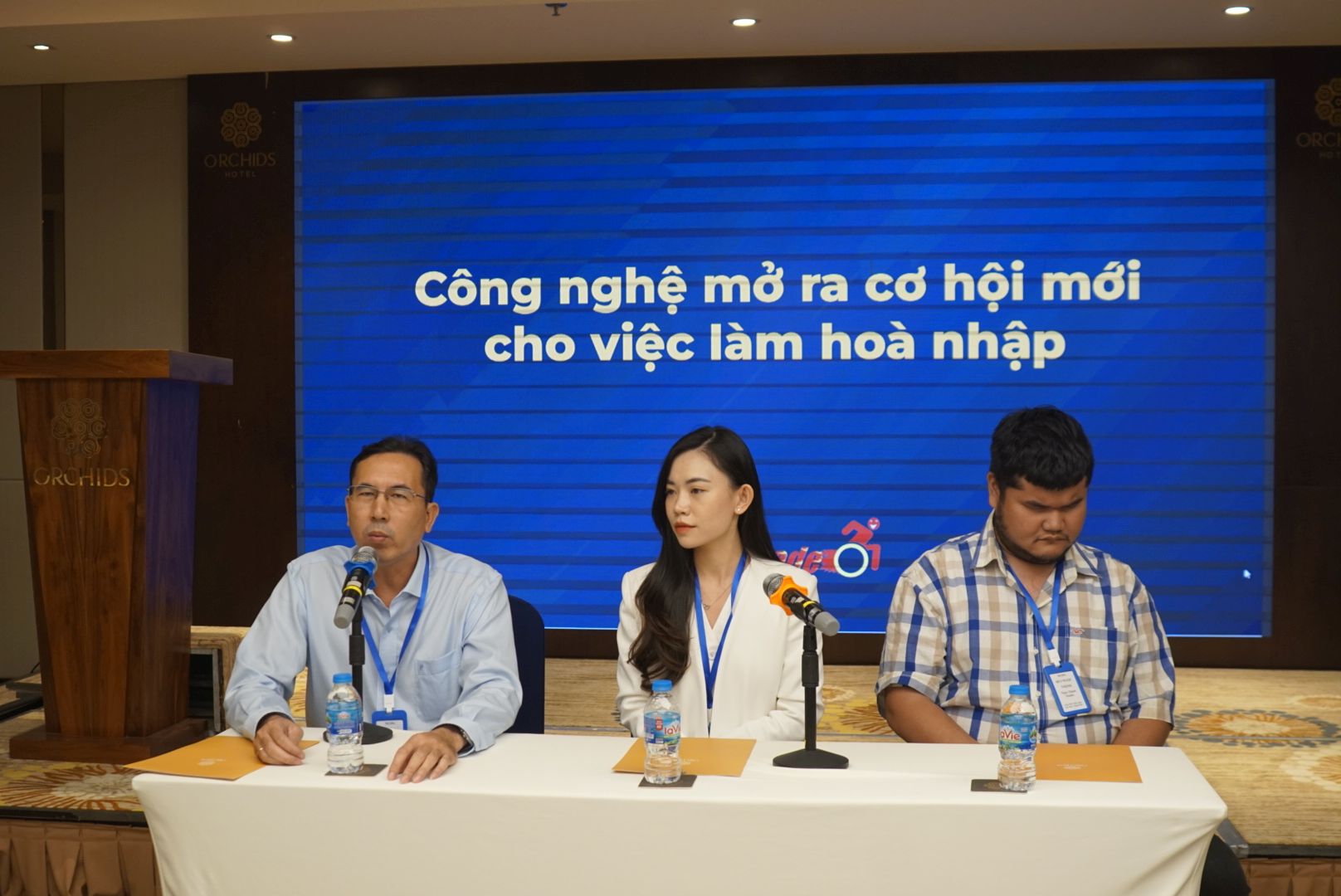
In the final part of her talk, Ms Trang underlined that no matter how powerful, technology alone cannot bring about change without a supporting ecosystem. Sustainable progress can only be achieved when social organisations – which understand the needs of disability communities, government agencies – which design policies, and businesses – which create real job opportunities, all come together and act in partnership. This is also the core message that Enablecode brought to the conference: technology is already “there” on every personal device, supporting multiple languages and ready for everyone; what is still missing is our proactive effort to make full use of it to expand inclusive employment opportunities.
Ms Trang Nguyen’s presentation shows that technology is not only a tool for individual support, but can also be a driving force to redesign how companies recruit, train and organise work. Through Enablecode’s journey – from direct recruitment, to collaboration with digital service providers, and on to policy advocacy – conference participants could see more clearly the path a Vietnamese organisation has taken to turn technology into a bridge for inclusive employment. It is also a call to action for businesses: start with small adjustments, make better use of the tools already available, and partner with support organisations, so that every new job opportunity created is also a step forward for the inclusion of persons with disabilities in the labour market.
Share via:
EmailFacebookTwitterGoogleLinkedin